

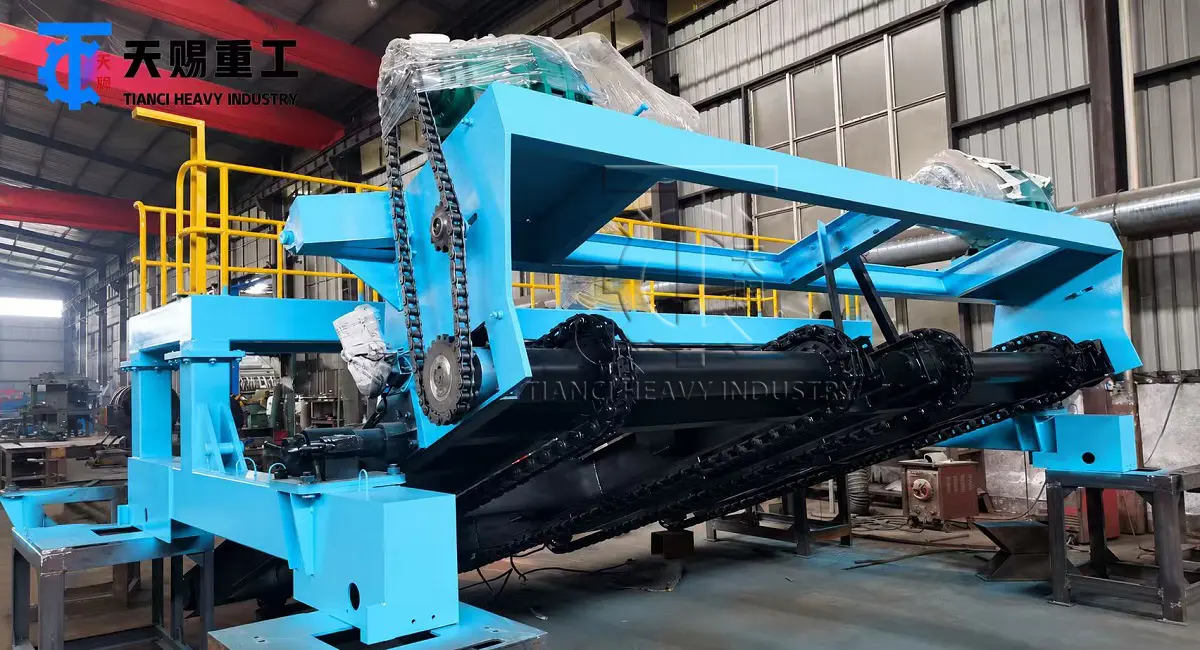
1. Chain Plate Compost Turner: Making Organic Waste Composting More Efficient and Stable
In the organic fertilizer production process, compost quality largely depends on whether turning provides sufficient oxygen. Many companies encounter issues during composting, such as long fermentation cycles, high moisture content, uneven decomposition, strong odors, and high labor costs. These problems not only affect production efficiency but also reduce the quality of organic fertilizer products.
The Chain Plate Compost Turner is a high-efficiency turning device specifically developed for the trough-type aerobic composting process. It continuously turns the material, increases oxygen supply, promotes rapid microbial proliferation, accelerates the decomposition of organic waste, and simultaneously improves compost quality and production efficiency.
Whether dealing with livestock and poultry manure, sludge, agricultural waste, food processing residues, or other organic solid wastes, the chain plate compost turner enables continuous, efficient, and stable turning operations, making it a key piece of equipment in modern organic fertilizer production lines.
2. What Is a Chain Plate Compost Turner?
A chain plate compost turner is a type of organic fertilizer equipment specifically designed for trough-style aerobic composting. By continuously turning the material—bringing the bottom layer to the top—the equipment ensures the compost pile is fully exposed to air, creating an optimal growth environment for aerobic microorganisms. This accelerates the decomposition of organic matter and improves fermentation efficiency.
Compared to traditional manual turning or conventional turning equipment, it offers the following advantages:
- Faster fermentation cycles
- More uniform turning performance
- Enhanced aeration capabilities
- Significantly reduced labor requirements
- Full support for continuous, automated production
It is currently widely used in organic fertilizer plants, livestock and poultry farms, agricultural waste treatment centers, and projects dedicated to the resource recovery of organic solid waste.
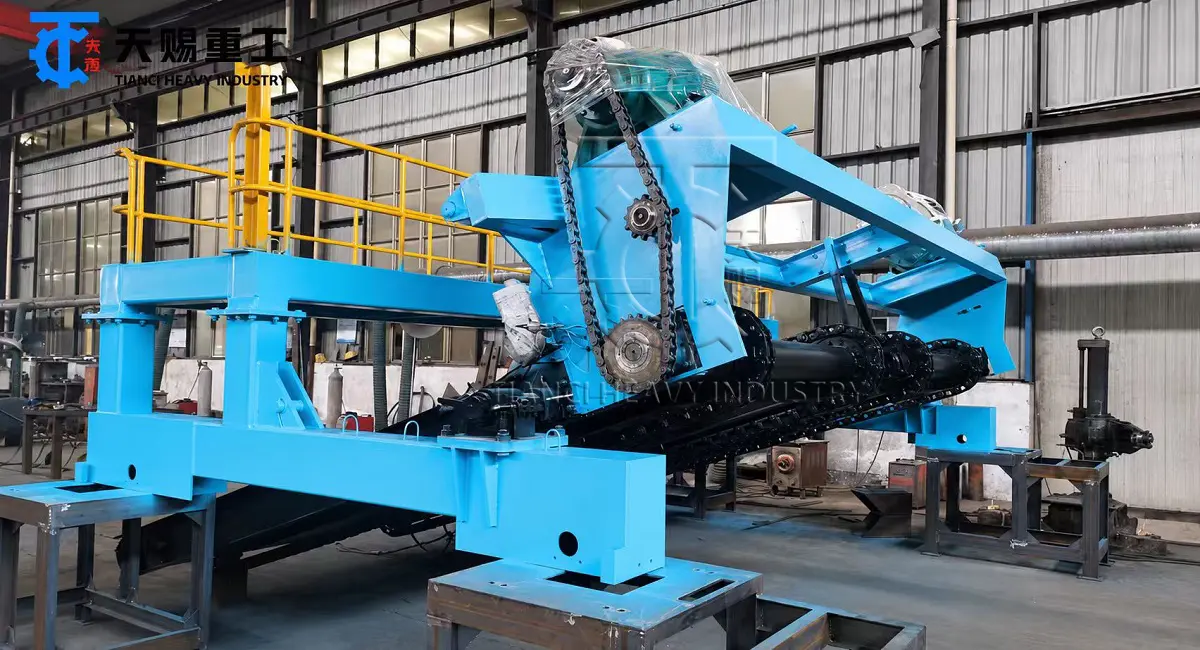
3. How Does a Chain Plate Compost Turner Work?
The equipment runs smoothly along the fermentation trough, with the turning mechanism continuously performing actions such as digging, lifting, crushing, and throwing to thoroughly loosen and distribute the material. Throughout the turning process:
- Oxygen continuously penetrates the interior of the compost pile.
- Moisture evaporates rapidly.
- Organic matter is thoroughly mixed.
- Microbial activity continues to increase.
- The fermentation temperature becomes more balanced and stable.
Because the material remains in contact with the turning mechanism for a longer duration and is tossed to a greater height during the process, the contact area between the material and air is effectively maximized, accelerating the rate of aerobic fermentation and improving overall compost quality.
4. Core Advantages of the Chain Plate Compost Turner
1. Variable-Frequency Travel System for Smoother Operation
The equipment utilizes variable-frequency speed control technology, allowing flexible adjustment of operating speed based on different raw materials and fermentation stages. Key advantages include stable operation, energy savings, strong adaptability to diverse materials, flexible longitudinal and lateral movement, and the ability to meet the operational needs of various fermentation troughs.
2. Hydraulic Lifting System for Flexible Depth Adjustment
The hydraulic lifting mechanism adjusts the position of the turning components based on the height of the material pile and the fermentation stage, ensuring more uniform turning. Advantages include simple operation, convenient adjustment, improved turning efficiency, and enhanced equipment safety.
3. Reliable Chain Drive System
A proven chain drive structure provides stable power to the turning system. Key features include reliable power transmission, a low failure rate, minimal maintenance costs, a long service life, and the ability to satisfy continuous production demands.
4. Wear-Resistant Turning Tines for High Efficiency
The turning components feature a rolling tray structure equipped with removable, wear-resistant curved tines. During operation, the system efficiently excavates and lifts material, breaks up clumps, distributes material evenly, and enhances aeration. This design effectively reduces material moisture content, accelerates the fermentation rate, and improves the quality of the final organic fertilizer product.
5. Key Benefits for Organic Fertilizer Production Facilities
For large-scale organic fertilizer production enterprises, chain plate compost turners deliver value across multiple areas:
- Accelerated Fermentation: Continuous oxygen supply boosts microbial activity and significantly shortens the fermentation cycle.
- Superior Product Quality: Achieves more uniform material mixing, thorough decomposition, and consistent product quality.
- Reduced Energy Consumption: An optimized turning structure lowers operational resistance, enabling energy-efficient performance.
- Lower Labor Costs: Supports remote control and automated operation, drastically reducing manual labor requirements.
- Enhanced Durability: Flexible tensioning and shock-absorption systems protect transmission components, extending equipment service life.
- Seamless Automation Integration: Can be configured with automatic feeding/discharge systems, forced ventilation/aeration systems, and solar-powered composting chambers to help enterprises build fully automated, intelligent production lines.
6. Suitable Raw Materials
The equipment is highly versatile and capable of processing a wide range of organic solid wastes, including:
- Animal Manure: Chicken, cattle, pig, and sheep manure
- Industrial & Municipal Waste: Municipal sludge, filter sludge, pharmaceutical waste, and biogas slurry
- Agricultural & Food By-products: Distillers’ grains, cassava pulp, furfural residue, humic acid, fruit/vegetable waste, and landscaping waste
Thanks to its strong adaptability, it easily meets the demands of large-scale, continuous organic waste treatment.
7. Why Is an On-Site Trial Run Recommended?
Because raw materials, moisture levels, processing capacity, and plant layouts vary greatly from one enterprise to another, relying solely on technical specifications is often insufficient when selecting equipment. Through an on-site trial run, customers can gain a clear, practical understanding of the equipment’s turning performance, operational stability, structural configuration, actual processing capacity, and compatibility with their existing processes. Selecting equipment based on actual trial conditions reduces long-term operational risks and maximizes overall return on investment (ROI).
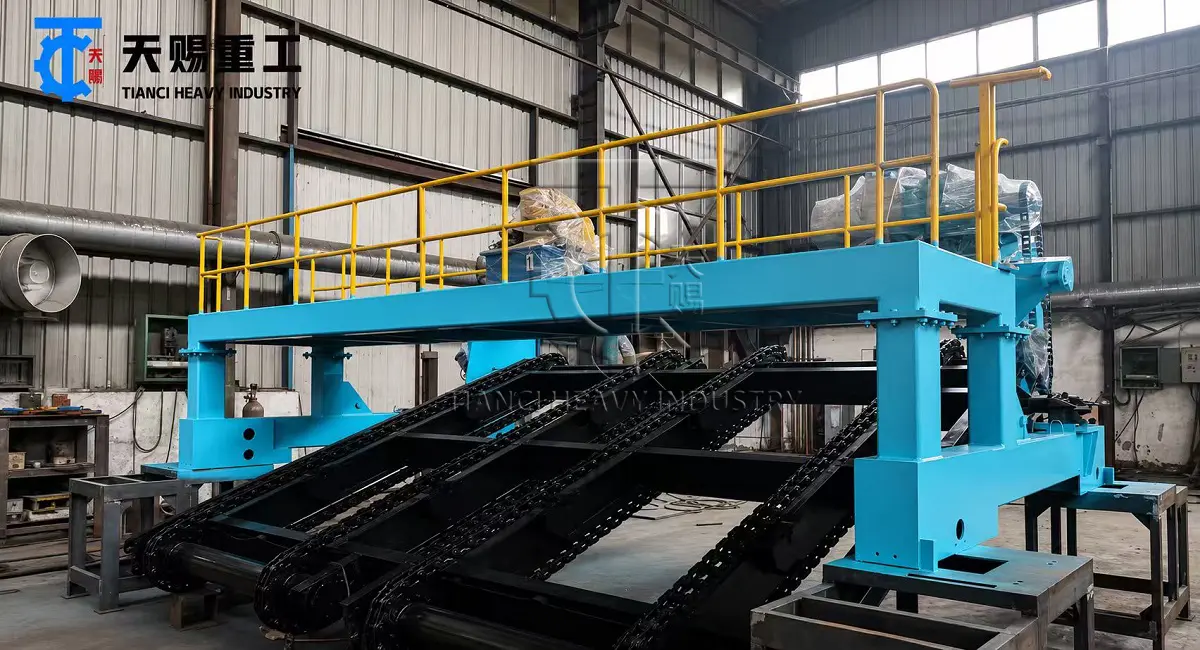
8. Why Choose Tianci Heavy Industry?
Tianci Heavy Industry has specialized in the R&D and manufacturing of fertilizer production equipment for over two decades, accumulating extensive experience in organic and compound fertilizer equipment lines. The company provides customized equipment configuration solutions based on customers’ specific raw materials, capacity targets, and plant designs, and actively supports on-site trial runs. Tianci Heavy Industry remains committed to supplying global customers with efficient, reliable, and environmentally friendly composting solutions—helping enterprises turn organic waste into valuable resources while driving the growth of sustainable agriculture and a circular economy.
9. Frequently Asked Questions (FAQ)
Q: What is the primary use of a chain plate compost turner?
A: It is primarily used for trough-style aerobic composting of organic solid waste. By continuously turning the material to supply oxygen, it promotes fermentation, improves composting efficiency, and enhances the overall quality of the organic fertilizer.
Q: What types of raw materials can it process?
A: It processes a wide variety of organic waste, including livestock and poultry manure, municipal/industrial sludge, agricultural residues, food processing waste, and green/landscaping waste.
Q: Does the turning process reduce moisture content?
A: Yes. Turning thoroughly loosens the material, maximizing its exposed surface area to air and facilitating rapid moisture evaporation.
Q: Does the equipment support remote control?
A: Yes. It can be equipped with an optional wireless remote control system to enhance operational safety and convenient site management.
Q: Can the equipment be customized according to specific production needs?
A: Yes. Optional features—such as automatic feeding, automatic discharge, and specialized aeration systems—can be fully integrated to achieve higher levels of production automation.
Post time: Jul-20-2026
