

With the rapid development of the livestock, crop farming, and organic fertilizer industries, an increasing number of companies are adopting mechanized aerobic composting processes to improve the efficiency of organic waste resource utilization. Throughout the composting process, the crawler-type compost turner serves as the core equipment; selecting the right model directly impacts fermentation efficiency, labor costs, and the final quality of the organic fertilizer.
However, many users often focus solely on price when purchasing equipment, neglecting factors such as processing capacity, pile size, raw material characteristics, and future production capacity planning. This can result in low equipment utilization rates and may even disrupt subsequent production. Therefore, it is crucial to thoroughly understand the features and applicable ranges of different models before selecting a crawler-type compost turner.
I. What Is a Crawler-Type Compost Turner?
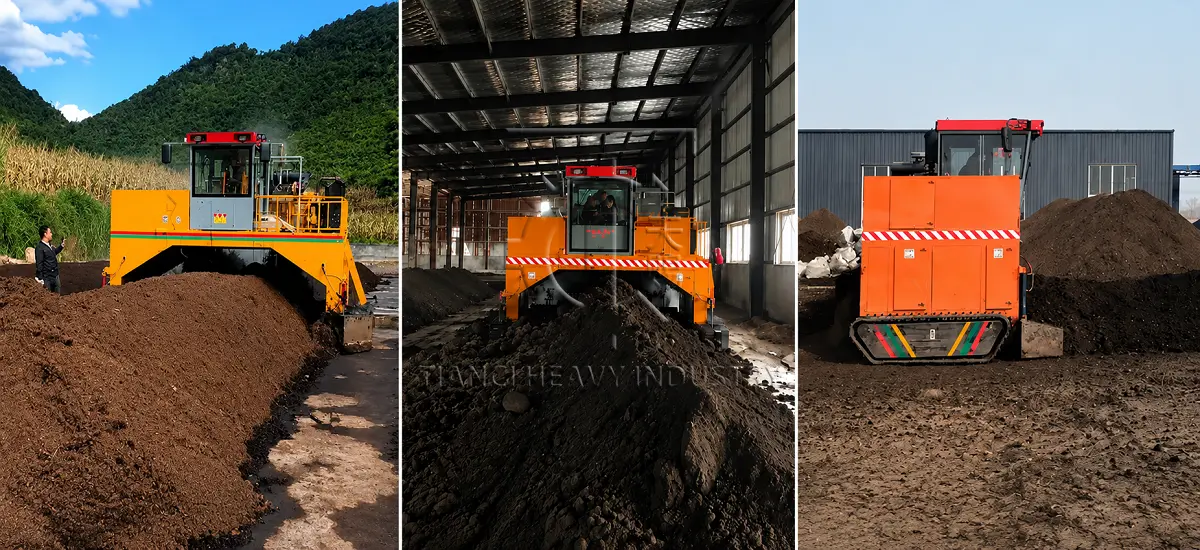
A crawler-type compost turner is a piece of equipment specifically designed for the aerobic fermentation of organic fertilizers. It is widely used in the composting of organic materials such as livestock and poultry manure, crop straw, mushroom residue, and landscaping waste. Through the coordinated operation of its tracked chassis and turning mechanisms, the equipment continuously turns the compost pile, allowing air to penetrate deeply into the material. This promotes rapid microbial reproduction, accelerates the decomposition of organic matter, and enhances composting efficiency.
Compared to traditional manual turning methods, mechanized turning not only improves operational efficiency but also ensures more uniform mixing of the material. This facilitates the even distribution of temperature, moisture, and oxygen throughout the compost pile, creating a more stable environment for aerobic fermentation.
II. Why Is Equipment Selection So Important?
In actual production, different enterprises vary in terms of raw material types, processing capacity, site conditions, and investment budgets; therefore, there is no single model that suits all users.
For example, small-scale livestock farms that select equipment that is too large will not only increase initial investment but may also result in underutilization of the equipment; conversely, for large-scale organic fertilizer producers, equipment that is too small may lead to issues such as insufficient turning efficiency and extended production cycles.
Therefore, equipment selection should comprehensively consider the following aspects:
1. The daily volume of raw materials to be processed;
2. The width and length of the composting site;
3. The designed height of the compost pile;
4. The type and moisture content of raw materials;
5. Future capacity expansion needs;
6. Budget and operating costs.
Only by comprehensively analyzing these factors can you select equipment that best suits your specific production needs.
III. How to Choose Among Different Models of Crawler-Type Compost Turners?
To meet the production needs of different users, we offer a variety of crawler-type compost turner models. Users can select the appropriate model based on their actual operating conditions.
TC-2400
Turning width: 2,400 mm
Turning height: 600–1,000 mm
Suitable for projects with relatively small processing scales and limited site space, it meets the needs of small- to medium-sized organic fertilizer production and livestock farm composting.
TC-2600
Turning width: 2,600 mm
Turning height: 1,100–1,300 mm
Suitable for production scenarios requiring increased processing capacity while maintaining equipment flexibility; it can be used for large-scale windrow composting.
TC-3000
Turning width: 3,000 mm
Turning height: 1,300–1,500 mm
Suitable for organic fertilizer production enterprises with high throughput; it improves turning efficiency per unit of time and is suitable for continuous production requirements.
Large-Scale Compost Pile Model
Turning width: 3,000 mm
Turning height: 1,600–1,800 mm
Suitable for large-scale composting facilities or projects requiring taller compost piles; can be configured according to on-site process requirements.
|
Model |
TC-2400 |
TC-2600 |
TC-3000 |
TC-3000 |
|
Turning Width(mm) |
2400 |
2600 |
3000 |
3000 |
|
Turning Height(mm) |
600-1000 |
1100-1300 |
1300-1500 |
1600-1800 |
|
Row Spacing(mm) |
800-1000 |
800-1000 |
800-1000 |
100-1000 |
|
Max.Diameter of Material Particles(mm) |
250 |
250 |
250 |
250 |
|
Power(horsepower) |
75 |
116 |
136 |
143 |
|
Working Knife Diameter(mm) |
400 |
500 |
500 |
800 |
|
Working Speed(m/min) |
6-10 |
6-10 |
6-10 |
6-10 |
|
Capacity(m³/h) |
500-700 |
1000-1200 |
1300-1500 |
1500-1800 |
For companies establishing an organic fertilizer production line for the first time, it is recommended to consider not only current production capacity but also future development plans when selecting a model, to avoid additional investment later due to insufficient equipment capacity.
IV. What Other Factors Should Be Considered When Selecting a Crawler-Type Compost Turner?
In addition to model specifications, it is recommended to focus on the following aspects:
1. Compatibility Between Equipment and Process:
Different composting processes have varying requirements for pile width, turning height, and operating modes; selection should be based on the overall process design.
2. Customization Options:
Since raw materials, site conditions, and production capacity requirements vary among customers, the ability to configure equipment according to actual needs helps improve production efficiency.
3. Comprehensive After-Sales Support:
Equipment installation and commissioning, operator training, and ongoing technical support all contribute to the long-term, stable operation of the equipment.
V. Why Are More and More Users Focusing on a Manufacturer’s Overall Capabilities?
A piece of equipment not only affects production efficiency but also subsequent operating costs. Therefore, when selecting equipment, it is advisable to assess the manufacturer’s R&D capabilities, production experience, and technical service capabilities.
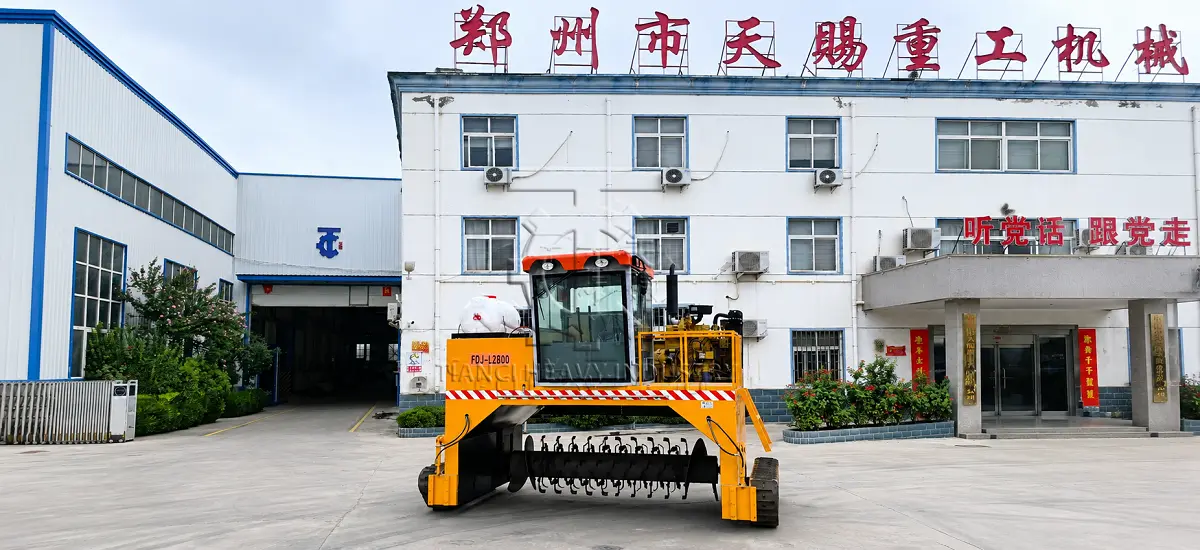
As a fertilizer equipment manufacturer, we have over 25 years of industry experience and are supported by a team of professional engineers, technicians, and sales staff. Our products have obtained relevant certifications such as ISO and CE. We offer a variety of crawler-type compost turners tailored to different customers’ raw material characteristics, processing scales, and production needs. Based on actual conditions, we assist users in selecting the most suitable equipment configuration to ensure the smooth implementation of their projects.
VI. Conclusion
There is no single “best” model of crawler-type compost turner; rather, there is only the choice that best suits your specific production needs. Before purchasing equipment, we recommend conducting a comprehensive assessment that takes into account processing capacity, raw material types, site conditions, and future development plans, rather than simply comparing prices.
If you are planning an organic fertilizer production project or wish to learn more about the application scope, technical specifications, and configuration options for different models of crawler-type compost turners, please feel free to consult us in detail based on your specific operating conditions. Selecting the right equipment based on actual needs is the key to improving composting efficiency, reducing operating costs, and achieving stable, high-efficiency organic fertilizer production.
Post time: Jul-31-2026
