

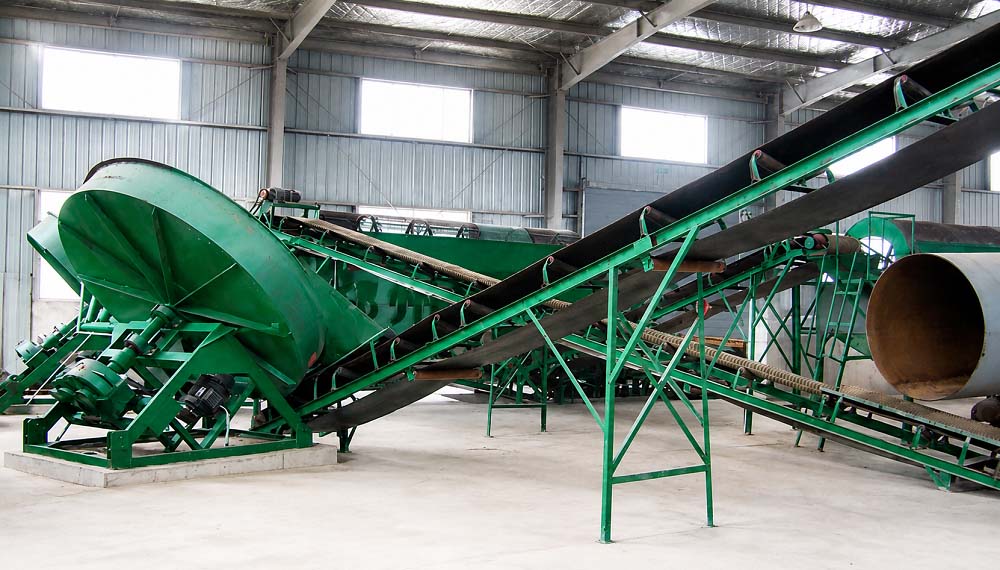
Equipment for processing chicken manure into organic fertilizer has emerged within the broader context of comprehensive utilization of livestock waste. The primary driving force behind this development is the shift toward integrated and industrialized approaches to chicken manure treatment and utilization, spurred by in-depth research into manure treatment and utilization technologies.
Anaerobic digestion of chicken manure not only produces biogas, but the resulting digestate and slurry also serve as important feed and fertilizer resources. Digestate contains various amino acids, vitamins, proteins, gibberellins, auxins, sugars, nucleic acids, and antibiotics. It can be used for seed soaking, foliar fertilization, and fertilizing farmland, fruit trees, and vegetables to promote crop growth and increase yields in agriculture, forestry, fruit cultivation, and vegetable farming. It can also serve as a feed additive for livestock, poultry, and fish, promoting animal growth. Digestate is rich in organic matter, humic acid, various amino acids, enzymes, beneficial microorganisms, and multiple trace elements. It has a loose texture, good moisture retention, and a moderate pH level. Used for soil improvement, it can serve as both a base fertilizer and a top-dressing fertilizer to enhance crop yield and quality, and it can also be used as a feed additive in livestock and poultry farming. Chicken manure organic fertilizer equipment was developed to utilize these raw materials and their various benefits for agriculture.
Chicken Manure Organic Fertilizer Equipment
Five Production Stages of Chicken Manure Organic Fertilizer Processing Equipment
Fermented chicken manure can serve as a growing medium for mushrooms, and the waste generated from mushroom cultivation can be further reused to grow other types of mushrooms or returned to the fields for vegetable and grain cultivation. By integrating multiple manure treatment and utilization technologies under industrial conditions, the process can produce not only organic fertilizer and feed but also fuels such as methane, achieving comprehensive and effective utilization. This represents the future direction of intensive chicken manure treatment.
1: Fermentation Section
The primary function of the fermentation section in an organic fertilizer production line is to initially reduce the moisture content in the raw materials. As is well known, these raw materials consist mainly of animal manure such as chicken, pig, cow, and sheep manure. While cow and sheep manure are relatively easy to handle, chicken and pig manure have much higher moisture content—especially chicken manure, whose initial moisture content is generally above 70% to 80%. With such high moisture levels, direct processing is impossible; the material must first undergo fermentation in a fermentation tank. Generally, about one week of fermentation can reduce the moisture content of fresh chicken manure from above 70% to below 40%. Here’s a helpful tip: during the fermentation of chicken manure, you can mix in some coarse-fiber materials like wheat bran or wheat chaff. This not only shortens the fermentation time but also reduces costs.
2: Crushing Stage
Fermented animal manure tends to form clumps, and clumpy material is difficult to dry directly. Therefore, it is recommended to first crush it using a small crusher before proceeding to the next stage. In organic fertilizer production equipment, the crushing stage is often an essential step.
3: Drying Stage
Questions often arise regarding why a drying stage is necessary when a fermentation stage has already been completed. In fact, fermentation can only control moisture content to a certain extent. To produce organic fertilizer pellets, moisture levels must be further regulated, making the drying process equally essential.
4: Granulation Stage
The organic fertilizer granulator is the core component of the entire organic fertilizer production line. Generally, we recommend using a combination of a granulator and a spherical shaping machine to achieve granulation ; we do not recommend using traditional disc granulators. The advantage of this approach is a high granulation rate and good density.
5: Cooling and Packaging Stages
The cooling and packaging stages can be omitted for users with small production volumes. Such users can simply air-dry the product and bag it manually. Only large-scale, complete organic fertilizer production lines require automatic packaging machines.
Fertilizer produced by organic fertilizer equipment not only reduces agricultural production costs and enhances soil fertility but also increases yields and improves crop quality, making it the ideal fertilizer for promoting green food and green agriculture. The organic fertilizer production equipment we manufacture is designed to produce a variety of fertilizers in accordance with market demand based on specific formulations. It operates fully automatically, achieving high economic returns with relatively low energy consumption and minimal labor.
In the development of modern agriculture in China, organic fertilizer equipment has integrated various advanced technologies. Combined with our professional expertise and extensive production experience, user operation is no longer a challenge. We have always prioritized user experience and equipment quality as the foundation of our production ; only when users can use our products with confidence can the manufacturer feel at ease.
Post time: Jul-10-2026
